



Free and Accessible Education and Community Economic Empowerment

<
<
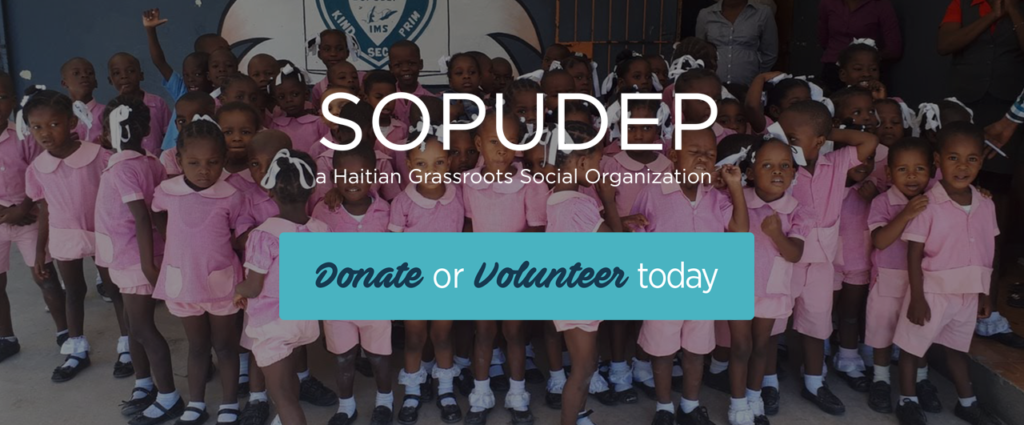
SOPUDEP (Society of Providence United for the Economic Development of Pétion-Ville) is a Haitian founded and run grassroots social organization located in Port-au-Prince, Haiti. It provides free accessible education to adults and children, and supports women's rights and economic empowerment for the poor. SOPUDEP is determined to use the power of education to improve life for the poorest members of the community, creating pride and hope for a better future.
SOPUDEP Updates
Appeal for Grassroots Haiti Teacher Training Workshop (April 22, 2012)
The following appeal I'm posting here deals with the issue of professional educational development for Haitian grassroots organizations and supporting their efforts to grow popular education. I am happy to report that the Haiti Union Solidarity Fund has generously pledged a $1000 towards this pilot project.
Martelly's 'education plan' for Haiti is a failed private enterprise model (March 23, 2012)
By Travis Ross and Roger Annis, published on the Haiti blog of Rabble.ca, March 21, 2012
When President Michel Martelly was elected in April of 2011 he made a promise to create space for all Haitian children at school. Soon after, he announced his intention to tax all international phone calls as well as money transfers in and out of Haiti in order to fund the policy.
Although the Haitian constitution does not give the president the power to levy taxes, Martelly launched a ‘National Fund for Education' in May 2011 with the goal of collecting $8.5 million per month by taxing all international phone calls in and out of Haiti at 5 cents per minute and all international money transfers at $1.50 per transfer. Haiti's largest source of foreign revenue is the money transfers that its Diaspora sends back to family members.
For most Haitians, education is an unattainable goal. According to the UN, the cost of an elementary school education can be prohibitive--40 per cent of family income to the average Haitian family. Only about two-thirds of Haitian children were enrolled in primary school before the earthquake; less than one third of those reach sixth grade. Haiti's illiteracy rate is an astonishing 57.24 percent, the highest in the western hemisphere.
The earthquake made the situation even more desperate. According to a report by UNICEF in March 2010, "80 percent of schools west of Port-au-Prince were destroyed or severely damaged in the earthquake, and 35 to 40 percent were destroyed in the southeast. This means that as many as 5,000 schools were destroyed and up to 2.9 million children here are being deprived of the right to education."
New Site to Promote Haitian Grassroots Organizations; March 18, 2012
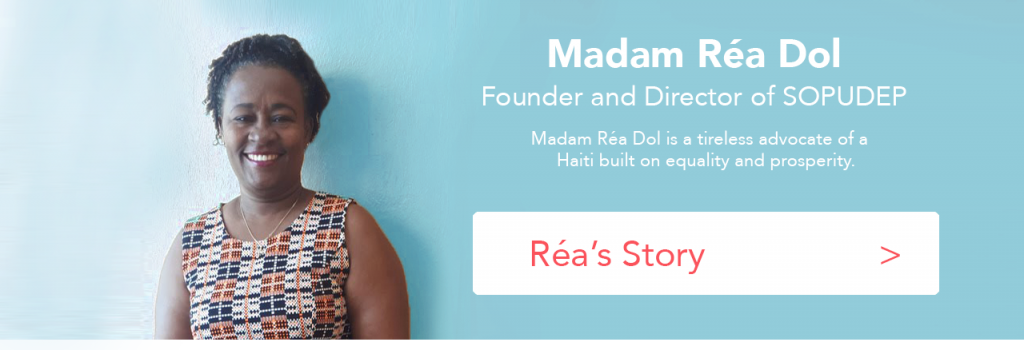
After several months of work a new site to promote Haitian grassroots organizations was put up last week, haitiangrassroots.org. This site is a collaboration between SOPUDEP founder Réa Dol and I (Ryan Sawatzky of the Sawatzky Family Foundation), as well as Wayne Abrams, who is turning this into an iPad app.
The goal of the site is to showcase the breadth of positive work going on within Haiti by Haitian founded and run social organizations. Most of these organizations have never had international exposure before and are doing what they can with no money. It is the hope that this site can create a forum where grassroots leaders and organizers can communicate with people in the international community and in turn, the international community help rally support and solidarity for these organizations.
It is the grassroots community that has brought about monumental democratic change in the Haiti thus far and will continue to do so. With better recognition and support, possibly their policies of change for the betterment of all peoples living in Haiti will become exponentially more effective.
Ryan Sawatzky
Sauvlyne's Hope: Haiti Two Years Later: January 18, 2012
Original version and posting at Sactuary for Kids
Photos by: Darren Ell
January 12, 2010, an earthquake ripped through the southwest end of Haiti, leaving thousands dead, and millions injured and homeless. The capital city of Port-au-Prince, with a population of 2 million living within 14 square miles, suffered the brunt of this quakes catastrophic effects. Over two hundred years since Haiti's independence, foreign exploitation of her citizens created a poverty that has wreaked havoc on the majority of the population. It was this chronic poverty and over population in Haiti's Capital that led to the devastating effects of this quake.
Those millions, who were left homeless, sought large open spaces to form makeshift camps. These camps are cobbled together, using any materials on hand. Bed sheets, old tarps and scrap metal fashion homes that are so close together, people are virtually living on top of one another. These camps are stiflingly hot, increasingly dangerous for women and children, and have poor sanitation, with cholera spreading like wildfire.
All of these camps residents come from the poorer sect of society. Even before the earthquake, these poor majorities had little to no hope for employment or education, and now, have little hope to leave this deplorable living situation. Sauvlyne Louis Jean is a young woman whom I met in the summer of 2011; a student attending SOPUDEP School, a Haitian community school our foundation supports. She is a resident of one of these camps and was kind enough to let us see her world.
Building Community and Joy in the Struggle (Holiday Appeal); Dec 09, 2011
From 1791 to 1804, the African slaves of Hispaniola (now Haiti and the Dominican Republic) revolted against the mightiest imperial powers of the time, declaring their independence as the first western black republic. We owe them a great deal of gratitude for this act of rebellion and showing us that there is no power to great to truly snuff out our dignity and spirit of humanity. Sadly, those old imperial powers, and those new, have rarely shown respect for Haiti's sovereignty. "There's gold in them thar hills", to put it glibly. Our colonial past is one of taking from others what is not ours to take. This has proven to be a tough habit to squelch.
Haiti need to realize their ancestors dream of a free and independent nation. This can only happen if we release the reigns of control and put them in the drivers seat. In a country such as Haiti, where there are over 10,000 foreign charities and NGO's operating withing it's boarders, seeing local Haitian grassroots organizations taking action to empower their fellow citizens is special and should be nurtured.
SOPUDEP and other Haitian grassroots organizations are a prime example of the capability for Haitian's to make their own way; to educate, to work, to deliver justice, to preserve their proud culture, and to heal. It is up to us however, to show our support and solidarity, and at this moment in time, to provide the means to make their work more effective. There is an end goal with supporting Haitian grassroots social initiatives; not just a never ending money pit of "charity". The majority of Haitian's will be the first to say that they don't want handouts, but a chance to create a nation and a history that is theirs and theirs alone.